"Come fasting" is the most common instruction a laboratory gives, and the one most often half-followed. A cup of sweet tea at six in the morning, a tablet swallowed with breakfast, a fourteen-hour fast that leaves you light-headed — each of these changes a number on your report, and none of them are obvious mistakes.
Here is what fasting means in practice, and which tests actually need it.
What "fasting" means
A fasting sample means 8 to 12 hours with no food and no drink other than plain water. For most people that is dinner by 9 pm and a blood draw between 7 and 9 the next morning.
Two details matter more than they sound:
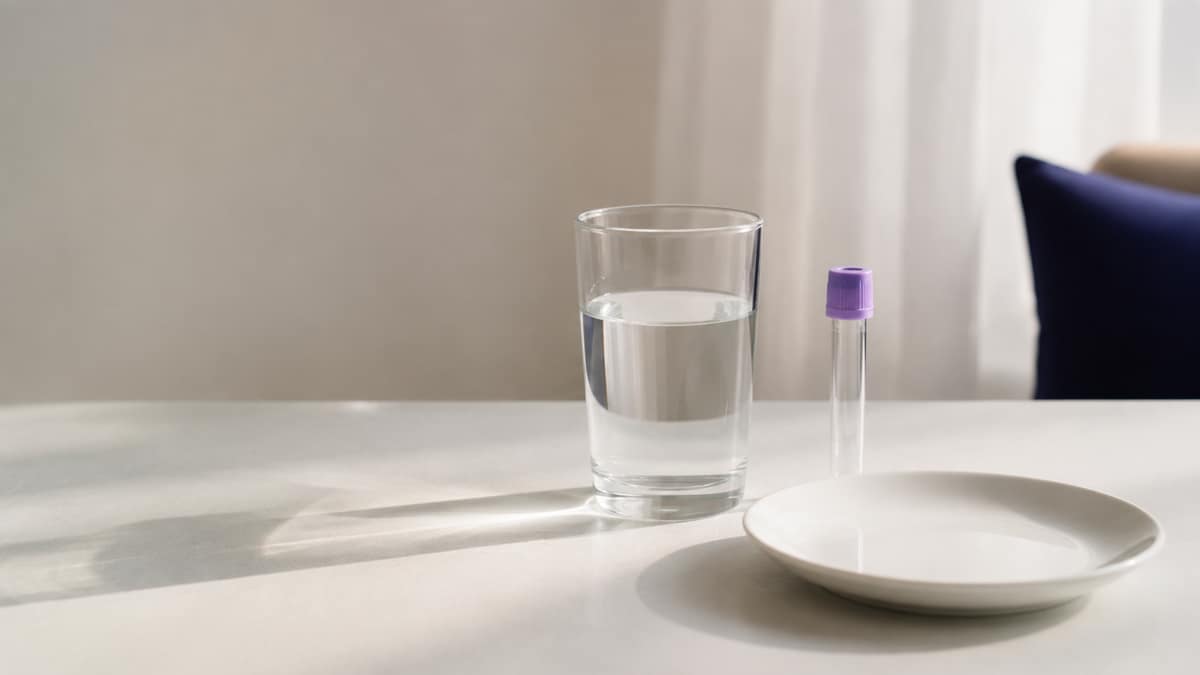
- Plain water is allowed, and encouraged. Dehydration makes veins harder to find and can nudge results that depend on blood concentration. Drink water normally.
- Longer is not better. Fasting beyond about 14 hours can start to shift the very values being measured. If your appointment is delayed into the afternoon, tell us — it is usually better to reschedule than to stretch the fast.
Tea, coffee, milk, juice, chewing gum, mouth freshener and paan all break a fast. So does smoking, which affects several tests independently of food.
Which tests need fasting — and which do not
| Test | Fasting needed? |
|---|---|
| Fasting blood sugar (FBS), fasting insulin | Yes — 8 to 12 hours |
| Lipid profile (cholesterol, triglycerides) | Usually 9 to 12 hours; some doctors now accept a non-fasting sample. Follow the prescription. |
| Oral glucose tolerance test (OGTT) | Yes, and stay at the centre between draws |
| HbA1c | No |
| Thyroid profile (TSH, T3, T4) | No |
| Complete blood count (CBC) | No |
| Liver and kidney function tests | Usually not, unless the doctor has asked |
| Vitamin D, vitamin B12 | No |
When a full health package mixes fasting and non-fasting tests — most do — treat the whole package as a fasting appointment. That is the simplest way to get every value right in one visit.
Medicines: do not stop anything on your own
This is the part people get wrong in good faith. Regular medicines for blood pressure, thyroid, epilepsy or heart disease should be taken exactly as prescribed unless your doctor has told you otherwise. Skipping a dose to "keep the test clean" can be genuinely dangerous, and it rarely improves the result.
Three common exceptions your doctor may raise:
- Thyroid tablets on the morning of a monitoring test — many doctors prefer the sample drawn before the day's dose. Take the tablet immediately after.
- Diabetes medicines when you are fasting for the test — ask in advance how to time them, particularly with insulin.
- Biotin supplements (often in hair, skin and nail formulas) can interfere with several hormone assays. Mention any supplement you take, even if it seems unrelated.
The 24 hours before
- Alcohol raises triglycerides and disturbs liver values. Avoid it for at least 24 hours before a lipid or liver test.
- Heavy exercise the previous evening can raise muscle enzymes and, briefly, some kidney markers. Keep to your normal routine, not a harder one.
- Sleep and stress matter for cortisol and, to a smaller extent, glucose. A rushed, sleepless morning is not an ideal one for testing.
On the day
- Drink a glass or two of plain water before leaving home.
- Carry your prescription and, if you have them, previous reports — comparing to your own earlier values is far more useful than comparing to a range.
- Wear something with sleeves that roll up easily.
- Tell the phlebotomist if you have fainted during a blood draw before, are pregnant, or are on blood thinners.
- Carry something to eat for immediately after the sample, especially if you are diabetic.
If you are unwell, in pain, or cannot travel, a fasting sample can be collected at home. Book a home collection for the early-morning slot and the fast is easier to keep — you are not travelling on an empty stomach.
A common worry, answered
"I forgot and drank tea. Should I still give the sample?" Tell the collection staff before the draw rather than after. For a non-fasting test it changes nothing. For a fasting sugar or lipid profile, it is usually better to come back the next morning than to file a result everyone will have to second-guess.
Preparation is not a formality. A correctly taken sample is the cheapest accuracy your report will ever get.
- Fasting
- Test preparation
- Blood test